




About Boniface

Strong businesses are built deliberately.

Read the story
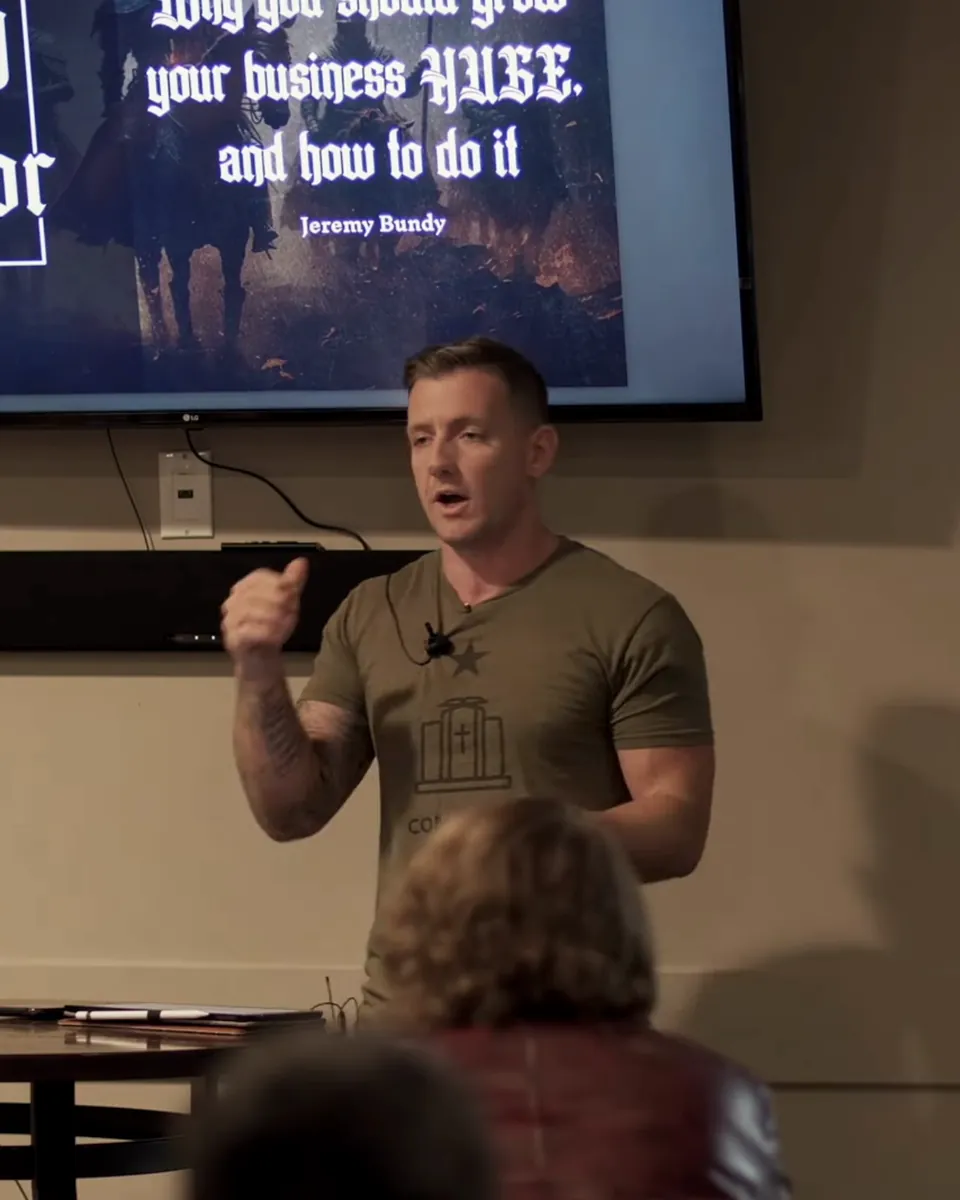
Jeremy teaching at Men of Valor

Boniface Business Solutions is a business growth and systems consultancy. We help business owners understand what is holding their companies back, strengthen what they have already built, and put the right strategies, systems, and tools in place for the next stage of growth.

Depending on the business, that might mean finding new sources of revenue, recovering time and capacity, improving an offer, rebuilding a sales process, automating repetitive work, or changing how the company goes to market. Sometimes it means building something new. Other times, the business already has enough stuff and needs someone willing to question what should still be there.

We've learned not to assume which one it is until we understand the business.

01Where it started

How we got here

Boniface didn't begin as a business consultancy. Jeremy Bundy's career started in audio and video production, where he spent years working on marketing projects for companies investing serious money into content, websites, advertising, branding, and media.

He loved the creative work, but over time something started bothering him. A company would decide it needed a video, and Jeremy could make the video. It could look great, sound great, and do exactly what the client asked. But when he started asking why the company needed that video, how it was supposed to generate a return, or how it fit into the larger process of turning strangers into customers, the answers were sometimes surprisingly unclear.

The same pattern showed up elsewhere. A company needed a new website because the old one looked dated. It needed social media because everybody was on social media. It needed SEO because somebody said SEO was important. Later it was funnels, Facebook Ads, automation, AI, or whatever tool happened to be dominating the conversation. There was often plenty of activity and plenty of money being spent, but no clear understanding of how all the pieces were supposed to work together.

  • A video
  • A new website
  • Social media
  • SEO
  • Funnels
  • Facebook Ads
  • Automation
  • AI

Eventually, Jeremy became more interested in the question underneath the marketing than the marketing itself:

How does a business actually grow?

Jeremy Bundy explaining a point to a room, a presentation on the screen behind him.

That question led deeper into customer research, buyer behaviour, sales, offers, pricing, positioning, lead generation, systems, operations, technology, automation, and eventually AI. The more he learned, the clearer it became that the tools would continue to change while many of the principles underneath successful businesses remained remarkably consistent.

Boniface grew along with that realization. What began closer to a media and marketing company gradually became something broader. Today we still build websites, marketing, automation, AI systems, content, sales processes, and other tools when the work calls for them. The difference is that we no longer assume the tool is where the conversation should begin.

We start with the business.

An axe buried in the trunk of a great oak in a misty forest.

02The name

Why “Boniface”?

We didn't name a business consultancy after an eighth-century missionary because it tested well with a focus group.

Felled timber on cleared ground, with a stone city rising above the clouds beyond it.

The name comes from St. Boniface, the Anglo-Saxon missionary whose work took him into the Germanic territories of continental Europe. Among the stories most associated with his mission is the felling of Donar's Oak, a tree connected with pagan worship. Boniface took an axe to it, publicly challenging something the people around him had been taught to regard as powerful and untouchable.

That image stuck with us.

Not because we imagine fixing a bad CRM puts us in the same category as an eighth-century missionary. It doesn't. But businesses have a remarkable ability to develop their own untouchable assumptions. They accumulate processes nobody understands, marketing expenses nobody can justify, software nobody uses, meetings nobody needs, offers that stopped working years ago, and workflows held together by one employee and a spreadsheet called FINAL_v7_ACTUAL. Eventually nobody remembers why these things exist. They're simply part of the landscape.

Most conversations about growth focus on addition. More leads, more employees, more advertising, more software, more automation, more revenue. Sometimes that's exactly what a business needs, and we help build those things. But growth isn't always additive.

Sometimes the wiser move is to pick up the axe.

It might mean removing a process that creates more work than value, challenging an assumption about what customers want, abandoning a marketing channel the market doesn't use, simplifying an offer, or eliminating work that should never have existed in the first place. Clear the ground, prepare the soil, and make room for something stronger.

That's part of the spirit behind Boniface.

A busy market street inside a walled stone city in warm morning light: stalls, carts, workshops and people at work.

03An old idea

Build your strong city

“The rich man's wealth is his strong city.”

Proverbs 10:15

“The rich man's wealth is his strong city, and like a high wall in his own esteem.”

Proverbs 18:11

“The name of the Lord is a strong tower; the righteous run to it and are safe.”

Proverbs 18:10

There's another old idea behind how we think about business. Proverbs 10:15 says, “The rich man's wealth is his strong city.” We like that image because wealth has real, practical value. A healthy business can provide for a family, create good jobs, survive difficult seasons, invest in new ideas, support churches and charities, and give its owner the freedom to make decisions from a position of strength rather than desperation. Wealth creates options and gives us greater capacity to provide, employ, invest, give, protect, and build. We think those are good things worth pursuing.

But Scripture also gives us a warning about putting too much faith in the walls we build. Proverbs returns to the same image later, describing a rich man's wealth as his strong city and “…like a high wall in his own esteem.” Immediately before it, Proverbs 18:10 tells us that “The name of the Lord is a strong tower; the righteous run to it and are safe.” We think there is wisdom in holding those ideas together.

There is nothing wrong with building the city. Build a healthy company. Make money. Develop useful skills. Create jobs. Prepare for difficult seasons. Give generously. Build something your children can learn from and, God willing, make stronger. But don't confuse the strength of what you've built with the source of ultimate security. Wealth is useful, but it is not God. Business matters, but it is not your identity. Success can create its own kind of foolishness if we begin to believe that enough money, influence, technology, or planning can make us untouchable.

That's part of what Build Your Strong City means to us. We want to build businesses strong enough to provide, serve, endure, create opportunities, and do meaningful work for the people around them. We want to take seriously the responsibility of building wealth and stewarding resources well, while remaining humble enough to remember that even the strongest walls have limits.

Build the city. Just don't worship the walls.

04How we work

Principles first, tools second.

We've worked in marketing and technology long enough to watch a lot of revolutions come and go. Websites were going to change everything. Then SEO. Then social media, funnels, Facebook Ads, CRMs, automation, and now AI. Five years from now there will be another list.

We're not cynical about tools. Quite the opposite. We use them constantly, and Jeremy can lose an irresponsible amount of time experimenting with a new piece of technology if nobody stops him.

But a tool only becomes useful when it is attached to a real problem and a sound strategy.

A company can automate a terrible process. It can drive more traffic to a weak offer. It can build an expensive website its customers don't need. It can generate 200 pieces of AI content nobody wants to read. Given enough technology, a business can become remarkably efficient at doing something that should not be done at all.

That's why our work begins with questions.

  1. What is actually holding this business back?
  2. Where is money being lost?
  3. Where is time being wasted?
  4. What do customers really want?
  5. How does the company create demand?
  6. What happens when that demand arrives?
  7. What is already working?
  8. What is fragile?
  9. What needs to be strengthened, and what needs to disappear?

Once we understand the problem, we can choose the tool. Sometimes that's advertising. Sometimes it's automation. Sometimes it's a better offer, a new sales process, a different website, better customer research, or a system that gives the owner ten hours of his week back.

Principles first. Tools second.

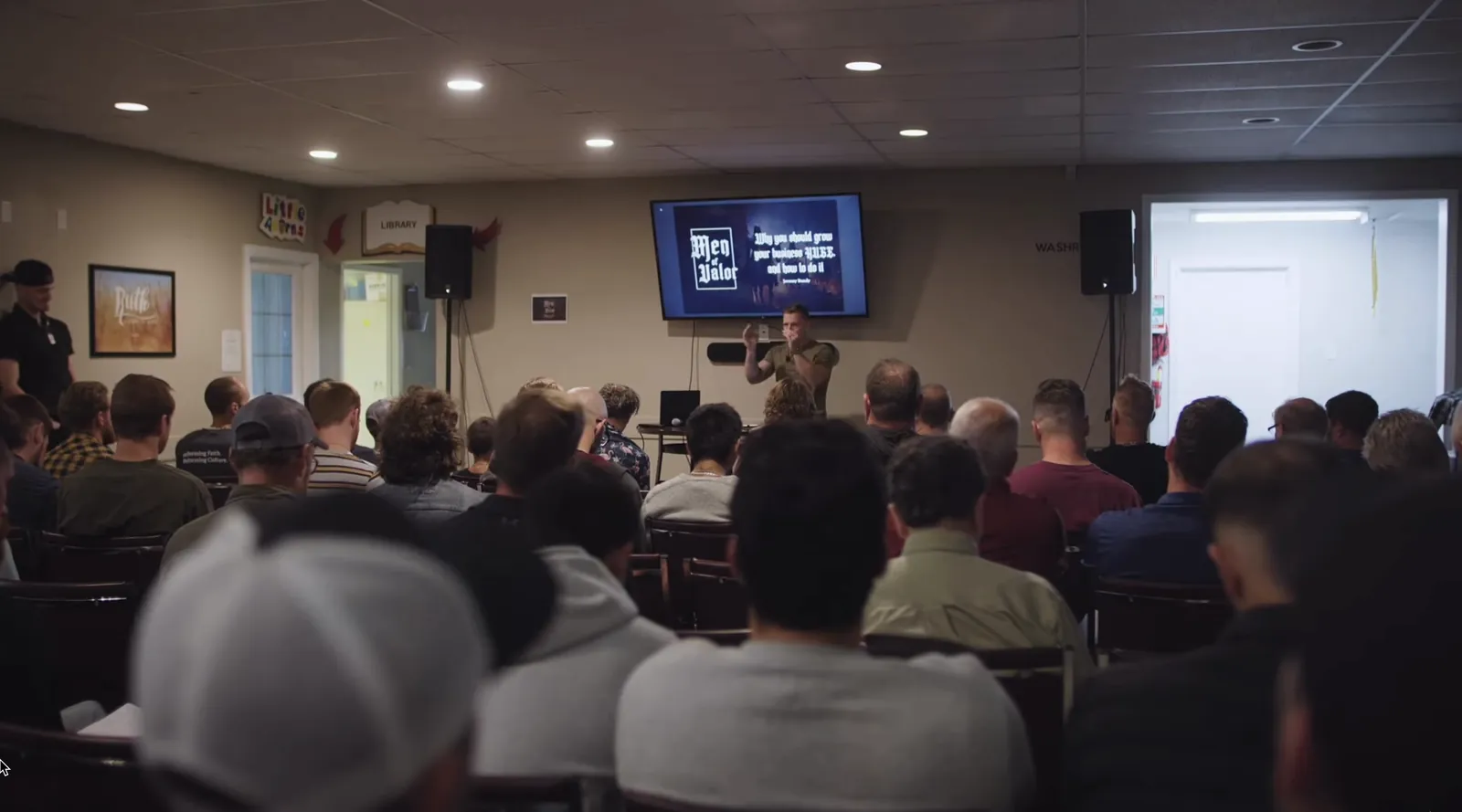
Jeremy Bundy speaking to a full room of men, a presentation on the screen behind him.
Old principles, modern tools. Jeremy teaching at Men of Valor.
Jeremy Bundy with his wife and children on a country road at sunset, green hills behind them.

05Who we are

A Christian company, on purpose.

Boniface is a Christian company. That isn't a niche we selected from a dropdown menu when we built the website, and it isn't something we tack onto the footer because it makes for good branding. Our faith shapes how we understand work, wealth, truth, responsibility, family, stewardship, and what a business is ultimately for.

  • We believe useful work is good.
  • We believe creating things that genuinely serve other people is good.
  • We believe providing for a household is good.
  • We believe employing people well matters.
  • We believe wealth carries responsibility, and that greater resources create greater opportunities to serve, build, give, invest, and prepare for the future.

We also believe success makes a terrible god.

Business culture has a way of turning revenue into identity and growth into an end in itself. Entrepreneurs can spend years sacrificing their families to build companies they originally claimed they were building for their families. We don't want that for ourselves, and we don't think another zero on a revenue report is enough to make a life well lived.

We don't always get that balance right either. We're building too. We make bad calls, chase ideas that don't work, overcomplicate things, and occasionally have to take an axe to our own assumptions. Part of good stewardship is being willing to admit when reality proves you wrong, learn from it, and change course.

You don't have to be a Christian to work with Boniface. We work with people from different backgrounds, and we have no interest in using faith as a gimmick for attracting a market segment. But we aren't going to hide it either. It's part of who we are, and it inevitably shapes the kind of company we're trying to build.

06Meet the team

The people behind Boniface

Boniface is a six-person team with experience across strategy, creative, advertising, technology, media, and implementation. Jeremy and Steve are the two you'll see most often publicly, but the work behind Boniface draws on the skills of the entire team.

Together, we cover a wide range of disciplines, which lets us bring different perspectives to a problem without trying to force every business into the same narrow set of services.

Jeremy Bundy, smiling, arms crossed, in a black shirt.

Jeremy Bundy

Founder & Growth Strategist

Jeremy is a husband, father, entrepreneur, marketing veteran, technology nerd, and the guy most likely to ask, “Why are we doing this?” halfway through a meeting.

His background spans audio and video production, marketing strategy, advertising, websites, sales, technology, automation, and business systems. That range is part of why Boniface became what it is. Jeremy has never been particularly interested in staying inside one professional category when the problem in front of him crosses five of them.

He likes first principles, smoking pipes, new technology, lifting unnecessarily heavy objects, working on the homestead, and figuring out why things work. His role at Boniface is to see the whole board: understand the business, identify the constraint, challenge assumptions, develop the strategy, and help determine what should actually be built.

The team has, at various points, referred to him as The Commissioner. There was no election.

Stephen Gay, smiling, arms crossed, in a navy T-shirt.

Stephen Gay

Director of Creative Strategy

Steve is a husband, father, professional drummer, creative strategist, and the guy most likely to say, “Something still feels off,” after everyone else thought the page was finished.

His background spans copywriting, messaging, creative direction, design, music, and the practical use of AI throughout the creative process. He works where business strategy meets communication, turning what a company needs to say into words, ideas, and visual concepts people can understand and act on.

He likes good design, good writing, new creative tools, making complicated ideas simple, and hitting things with sticks for money. His role at Boniface is to take the strategy and give it form: develop the message, find the idea, direct the creative, and make sure what gets built actually communicates what it was supposed to.

Years behind a drum kit may also explain his obsession with timing, feel, and noticing when something is slightly off. Unfortunately, this applies to websites too.

Together, Jeremy and Steve connect two sides of the work that we think belong close together: understanding what the business needs, then making sure what gets built communicates that clearly.

Six people

The team behind the work

Across our six-person team, we work in:

  • Business strategy
  • Customer research
  • Copywriting
  • Creative direction
  • Design
  • Web development
  • Google and Facebook advertising
  • Media buying
  • Video and content production
  • CRM systems
  • AI
  • Automation
  • Technical implementation
  • And more

Jeremy and Steve lead much of the client-facing strategy and communication, while the broader team brings the specialized skills required to turn that strategy into finished work.

Most projects can be handled entirely within Boniface. When something requires expertise beyond our core team, we can also bring in or consult with trusted specialists. The goal is simple: understand the problem, develop the right strategy, and put the right people around it.

The problem determines the strategy. The strategy determines the team.

Jeremy Bundy with his wife, their children and a big white dog in a field of tall grass and wildflowers.

07The long game

What we're trying to build

We're ambitious about BonifaceBS. We want to do excellent work, work with excellent companies, make money, create opportunities for the people who work here, and become considerably better at solving difficult business problems than we are today. We want to keep experimenting with new technology without becoming distracted by every shiny object that enters the market, and we want to keep learning from old principles that remain useful long after a platform disappears.

More than anything, we want the businesses we work with to be genuinely stronger after we've touched them. That might mean more revenue when revenue is the constraint, more capacity when time is the constraint, better systems, clearer thinking, fewer wasted resources, stronger foundations, or simply an owner who understands his business better than he did before.

A business is a powerful tool. It can create wealth, opportunity, employment, independence, generosity, and influence. It can strengthen a household and serve a community. It can give the next generation a better starting point than the one we received. We take those possibilities seriously, which is why we take the work of building businesses seriously.

We just don't take business as our god.

We intend to keep building the walls, strengthening the city, sharpening the axe, and doing the work in front of us. And, Lord willing, we'll remain humble enough to remember that our highest wall was never going to save us anyway.

Build the city. Just don't worship the walls.

Where to start

Find the constraint.

If revenue is the constraint, start with the Revenue path. If time is the constraint, start with Capacity. Not sure which one it is? That's exactly the conversation we like to have first.